Blog · Courses
Is the Crevasse Rescue & Glacier Skills Clinic right for me? What a Summit weekend actually teaches
Three days in the Beartooths, six students per instructor, and a hauling system you build until it is boring. The first rung of the Summit skills ladder, explained by the person who teaches it.
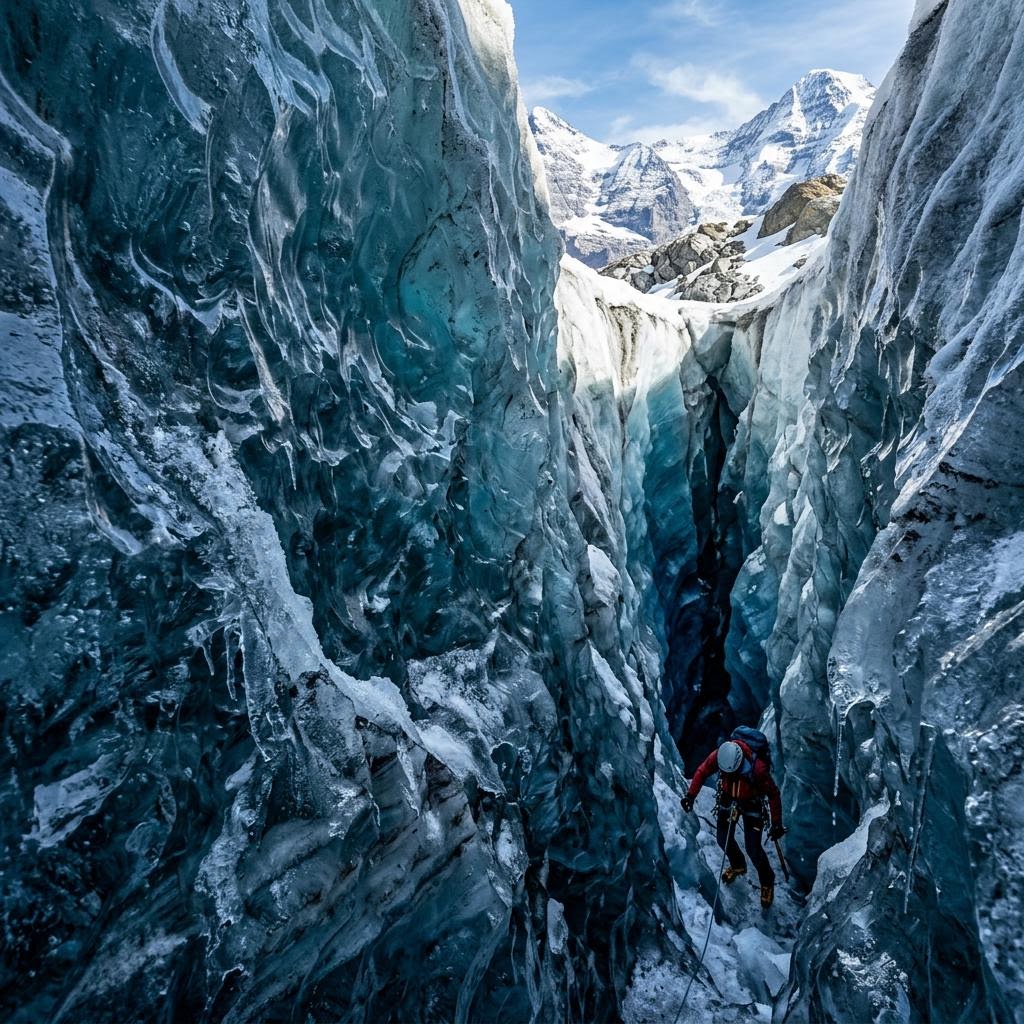
The Crevasse Rescue & Glacier Skills Clinic is right for you if you want to travel on glaciers with a rope team and be able to get a partner out of a crevasse, whether that is for Island Peak, the Haute Route or a weekend in the Cascades. It is a three-day weekend in Montana's Beartooth Range, graded Introductory, at six students per instructor and from $690, running monthly from May to September. Everything technical is provided; bring boots and grit. You learn rope-team travel, self-arrest, snow and ice anchors and a full 3:1 and 5:1 crevasse-rescue progression, taught with the exact drills our own guides certify on. It is the first rung of the Summit skills ladder and a direct pathway to our Himalayan and Alpine trips.
Priya Nair · Rock & Ice Instructor · · 3 min read
Last updated
Who is the clinic for?
Three kinds of people book it. Trekkers who have done the Everest Base Camp Trek and want the next step, which for most of them is the Island Peak Expedition, where summit day involves roped travel past crevasses and 300 m of fixed line. Skiers eyeing the Haute Route, where six of eight days are on glaciers. And climbers who simply want to stop being the person on the rope who does not know what to do when someone disappears into a slot.
You need no prior glacier experience. You need to be fit enough for three full days on snow at up to 3,300 m and willing to repeat a drill until it is dull. Freya Lindqvist co-teaches it with me, and between us we have taught the progression to most of the guide team.
What happens on each day?
Day one: ground school
We start at the flagship store in Bozeman with knots, hitches, harness fit and rope-team setup, then drive up to the snowline for self-arrest practice. By the end of the day you can stop a fall on a snow slope in every orientation, and you have tied into a rope team properly rather than approximately.
Day two: anchors and hauling
Snow and ice anchors, load transfer, and the 3:1 mechanical-advantage haul, built, broken down and rebuilt until it is boring. Boring is the standard. The pre-rigged Glacier Rescue Kit we sell ($189, pulleys, prusiks and a picket) is the same kit you will haul with, and by the end of the day you will know exactly why each piece is in it. We add the 5:1 for the heavier partner and the tired rescuer.
Day three: the full-scenario day
Roped glacier travel with surprise full-depth rescue scenarios, debriefed the way our safety team debriefs real incidents: what happened, what the rope team did, what the field manual says, what changes. Nobody is graded against another student. Everybody is held to the drill.
Why do we teach it the way we certify guides?
Because the drills are the same. An Alpine Guide on the Summit Certification Ladder has to pass the Glacier & Crevasse Rescue exam at 85% or better and log 25 glacier days, and every guide runs quarterly crevasse-rescue drills timed against our standard. The clinic is where that progression begins for clients, and I wrote the skills checklists the guide team uses, so the checklist you take home is the one our guides are assessed against. Small ratios make that possible: six students per instructor, ropes on from day one.
What do I need to bring?
Boots and grit, as the trip page says. Everything technical, rope, harness, helmet, axe, crampons and the hauling kit, is provided from the same inspected fleet our guides use. If you would rather try before you buy, the rental Full Glacier Kit, boots, crampons, axe, harness and helmet, is $120 per weekend. If you already own boots, bring them to the gear check so a fitter can confirm they take a crampon; Tobias Crane will mount it in the store before the weekend.
What comes after the clinic?
The direct pathway is Island Peak and the Haute Route. If you are coming from rock rather than snow, or want the full craft beneath the glacier skills, the five-day Rock & Ice Fundamentals Course in Hyalite Canyon and the Gallatin Range (from $1,450, four students per instructor) is the sibling course: movement on rock, footwork on steep ice, belaying, rappelling and the judgment conversation about when to go up and when to go home. Winter editions run on Hyalite's ice from December to March.
The clinic will not make you a mountaineer in a weekend. It will make you a useful member of a rope team, which is the thing a glacier actually requires. Come patient, come unhurried, and plan to build the haul one more time than you think you need to.
Last updated 30 September 2026.
Questions and answers
- Do I need glacier experience for the Crevasse Rescue & Glacier Skills Clinic?
- No. It is graded Introductory and starts with knots, harness fit and rope-team setup at the flagship store. You need fitness for three full days on snow at up to 3,300 m and the patience to repeat drills.
- What does the glacier clinic cost and when does it run?
- From $690 for the three-day weekend, monthly from May to September in Montana's Beartooth Range, at six students per instructor. Everything technical is provided.
- What rescue systems does the clinic teach?
- Self-arrest, snow and ice anchors, load transfer, and a full 3:1 and 5:1 crevasse-rescue progression, built and rebuilt until it is automatic, then tested in surprise full-depth scenarios on day three.
- Which Summit trips does the clinic prepare me for?
- It is the direct pathway to the Island Peak Expedition and the Haute Route Ski Traverse, and the first rung of the Summit skills ladder. The Rock & Ice Fundamentals Course is the sibling course for rock and ice craft.