Blog · Behind the scenes
What is a weather window, and who decides when a Summit team turns around?
On the big peaks the summit is unlocked by a short spell of survivable weather, not by strength. How our operations team reads a forecast, runs a radio schedule and shares the go/no-go call with the guide on the mountain.
A weather window is a period of calm, clear conditions long enough to summit and descend safely. On the highest peaks the limiting factor is usually wind, driven by the jet stream, and a window opens when it lifts or weakens, often in spring before the monsoon or in short autumn spells. Summit Outfitters buys specialist high-altitude forecasts delivered by satellite, correlates them with what the guides can see, and builds the summit plan around the window: position early, commit to hard turnaround times, keep a bail plan, and never chase a marginal window. The go/no-go call is shared between the lead guide and Base Camp, and the decision to abort a window is respected without argument. That is written into the communications plan every trip carries.
Kenji Mori · Operations Lead · · 4 min read
Last updated
What makes a weather window a window?
Four things, and the team watches all of them. Summit wind speed, where a common go/no-go threshold is well under about 30–50 km/h at the top. Precipitation and cloud, because snow loading raises avalanche risk and kills visibility. Temperature and wind chill at the summit and the high camps. And window length, which has to cover going up and getting back down, not just the ascent.
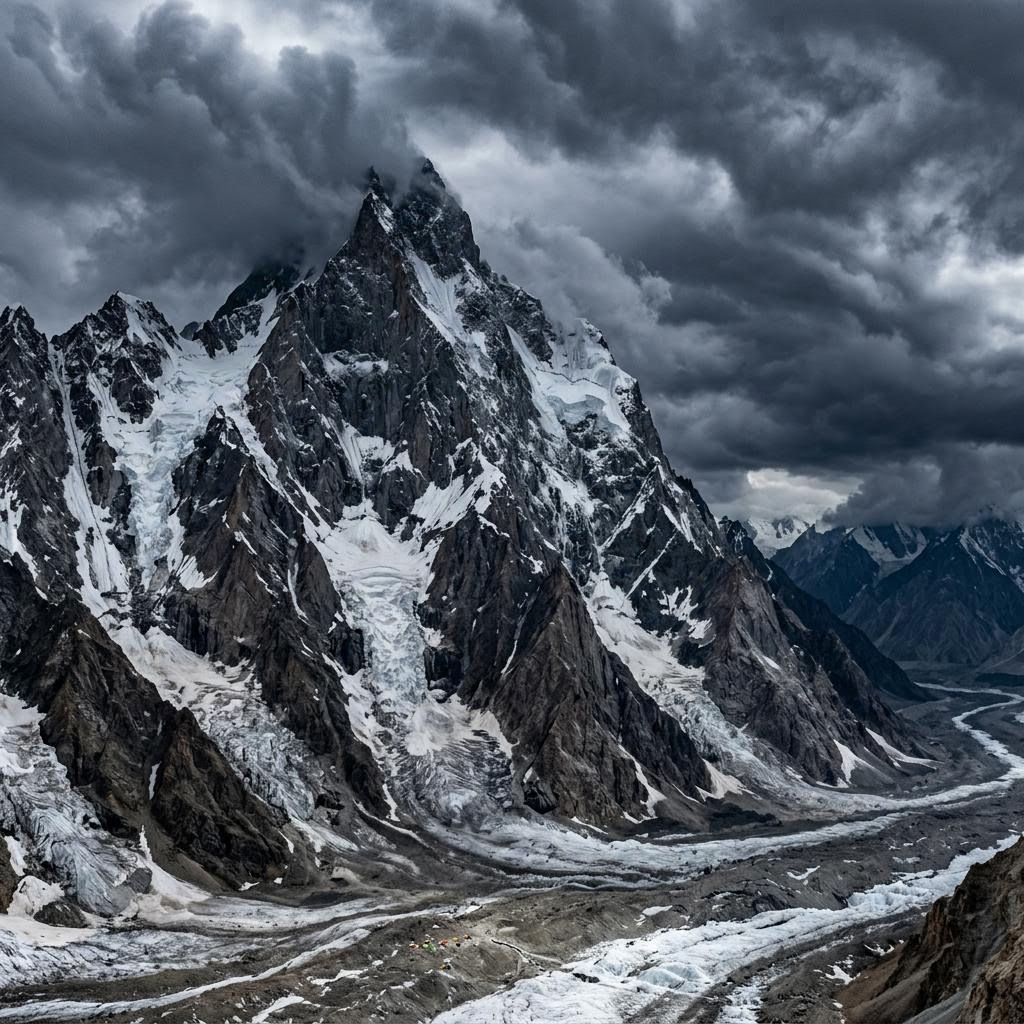
The jet stream is the reason wind dominates. In winter it sits low over the Himalaya and the Karakoram, and summit winds are lethal. When it lifts north or weakens, they drop to climbable. Reading when that will happen is the whole game.
Where does the forecast come from?
Modern expeditions buy specialist high-altitude forecasts from dedicated meteorologists running numerical weather models resolved to the specific peak and altitude bands. They arrive by satellite communication. Our operations team handles that pipeline, which is part of the deep logistics bench the guiding team leans on, but the forecast only sets the plan and the timing. The guides correlate it with what they see: cloud caps, the plume off the summit, pressure trends. The mountain is the final authority.
How does the radio schedule work?
Reliable communication is a safety system, not a convenience, and it comes in layers.
The three layers of expedition communication
- VHF/UHF radios for line-of-sight contact between rope teams and between camps. This is the workhorse of daily operations.
- Satellite phones and messengers for forecasts, Base Camp to home, and emergencies beyond radio range.
- Scheduled check-ins, fixed times when climbers report position, status, oxygen and intentions. A missed check-in triggers escalation.
The Summit communication protocol adds four rules on top. A fixed radio schedule with a named net controller at Base Camp. Reports on entering and exiting hazard zones, so the team knows who is exposed. Clear turnaround authority, shared between the lead guide and Base Camp. And redundancy: at least two independent communication methods on any summit push.
What does that look like on the Baltoro?
The 22-day K2 & Concordia Base Camp Trek is fully staffed expedition camping with satellite communications and a full camp crew. The schedule holds from the final load sort with our Balti crew in Askole, up the lower Baltoro past Trango and Masherbrum, through two nights at Concordia at 4,650 m and the day trip to K2 Base Camp and the Gilkey Memorial at 5,150 m. The optional Gondogoro La exit at 5,585 m is the clearest case of the framework in a trekking context: it is crossed only when conditions and the party permit, and the buffer days built into the itinerary are what make "no" an affordable answer.
Yuki Tanaka coordinates the logistics behind that schedule and Elias Bauer handles the permits and compliance paperwork that get a party onto the glacier at all. Oskar Lindgren audits the communications plan before the trip leaves. If it is not signed, the trip does not go.
How is the summit plan built around the window?
- Position early. Teams move up to the high camps in the days before a forecast window so they are poised to launch.
- Commit to turnaround times. As the 1996 Everest season showed, a window that closes while climbers are still high is deadly. Hard turnaround times govern the push regardless of how close the top looks.
- Keep a bail plan. Know the descent, the emergency caches and the point of no return before you start up.
- Don't chase a marginal window. A short or shrinking window is a no. The peak will be there next season.
Who actually makes the call?
The lead guide and Base Camp, together, and the decision to abort is respected without argument. Every Summit guide signs the Turnaround Charter: hard turnaround times are non-negotiable, and any guide may abort a summit bid without penalty. Safety authority sits with the guide and Base Camp, not with a client's summit ambition, and the Guiding Standards Committee audits a random 10% of trip logs each season for turnaround adherence.
From the operations desk in Bozeman that looks like a quiet radio schedule, a forecast that arrives on time, and a guide who turns a party around at the agreed hour with a clear sky overhead because the window would not have covered the descent. Weather discipline is the quiet core of expedition safety: forecast well, communicate on schedule, launch into a real window, and turn around on the clock, not on hope.
Last updated 30 September 2026.
Questions and answers
- What is a weather window on a high peak?
- A period of calm, clear conditions long enough to summit and descend safely. The limiting factor high up is usually wind driven by the jet stream; a common go/no-go summit-wind threshold is well under about 30–50 km/h, and the window has to cover the round trip.
- How do Summit teams get their forecasts?
- From specialist high-altitude forecasts produced by dedicated meteorologists and delivered by satellite, then correlated with what the guides see on the mountain: cloud caps, the summit plume and pressure trends.
- Who decides when a Summit team turns around?
- The lead guide and Base Camp share the go/no-go call, and an abort is respected without argument. Every guide signs the Turnaround Charter, and any guide may abort a summit bid without penalty.
- What communications does a Summit expedition carry?
- VHF/UHF radios for team and camp contact, satellite phones or messengers for forecasts and emergencies, a fixed radio schedule with a named net controller at Base Camp, and at least two independent methods on any summit push.
#Weather windows #Communications #Karakoram #Operations
Related articles
Behind the scenes
How does a new Summit boot-fitter learn the bench?
The fitting guide is five steps and a checklist. Teaching a new fitter to apply it to a real foot, a real objective and a real crampon is the job. How the floor team trains, and where the guide lives.
Tobias Crane · Boot-Fitting Specialist · · 4 min read