Blog · Behind the scenes
How does a new Summit boot-fitter learn the bench?
The fitting guide is five steps and a checklist. Teaching a new fitter to apply it to a real foot, a real objective and a real crampon is the job. How the floor team trains, and where the guide lives.
A new Summit Outfitters boot-fitter learns the bench the way a guide learns a rung of the Certification Ladder: a written standard, shadowed sessions and a checklist that is signed or it is not. The standard is the Technical Boot Fitting Guide our whole floor team trains on: qualify the objective, measure and size late in the day to the larger foot, run the heel-lock, downhill-toe, volume and flex checks, mount the actual crampon before sale, and counsel on liner drying and lacing. Marisol Vega coaches the floor on consultative fitting, so the conversation starts with your feet and your plans. The guide, the layering reference and the boot-evolution notes live in Vera, the knowledge and training platform the company runs on, where a new fitter can look up the step and see the source it came from.
Tobias Crane · Boot-Fitting Specialist · · 4 min read
Last updated
Why does a shop need a fitting standard at all?
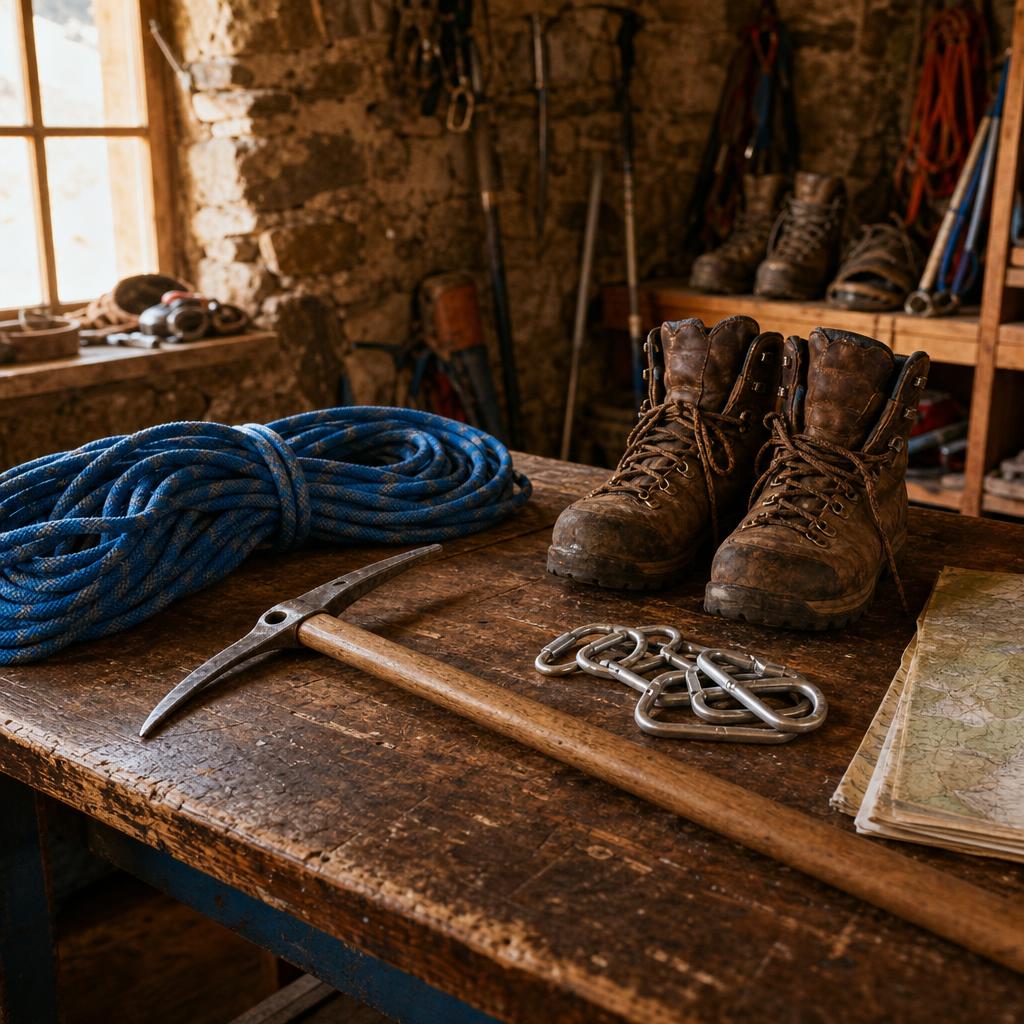
Because a badly fitted mountaineering boot causes blisters, cold injury and lost toenails, and a well-fitted one is invisible for twelve hours on hard ground. A Summit fit is not "does it feel okay in the aisle." It is "will these keep every toe attached on a twelve-hour descent." That standard is what sends customers back to us, and it is why we sell boots only with a fit session.
The bench itself dates from 2011, when the flagship store moved to Alpenglow Way and added the boot-fitting bench and the rental fleet. Celeste Arden was once the store's youngest boot-fitter; she came back as CEO in 2021. Nobody on the floor is allowed to forget either fact.
What does a new fitter have to learn?
The guide is five steps. Learning to run them on a nervous customer with a Denali booking and a blister history is the apprenticeship.
Step one: qualify the objective
Before touching a boot, establish the use case, because stiffness and warmth must match terrain. Approach and non-technical trekking means a flexible boot with strap-on (C1) crampon compatibility if any. General mountaineering and glacier travel means a semi-rigid boot with a heel welt for hybrid (C2) crampons. Technical ice and high altitude means a rigid, fully welted boot for automatic (C3) step-in crampons, and a double boot for extreme cold. Record the coldest expected temperature and the longest planned day; those drive the double-boot decision.
Step two: measure and size
Measure both feet, length, width and arch, late in the day when they are largest, and fit to the larger foot. Fit over the one warm mountaineering sock the customer will actually climb in, never doubled, because double socks reduce circulation and cause cold feet. Size for a thumb's width, about 1–1.5 cm, ahead of the longest toe. On descent the foot slides forward, and toes that touch the front lose their nails on every downhill.
Step three: the fit checks
Heel lock, with no more than a few millimetres of lift when laced. Toe splay on the fitting ramp facing downhill. Volume and width, with no pinching across the ball and no swimming; adjust with footbeds before assuming the boot is wrong. Flex point, matched to the ankle, remembering that a stiff technical boot is built to stand on crampon points, not to stroll.
Step four: mount the crampon
Physically mount the customer's or a demo crampon in the store, confirm the welt matches the binding, check the bail seats and the crampon does not rock. Never sell a boot and crampon pair without mounting them together. This is the step new fitters most want to skip when the floor is busy, and the one I never let them.
Step five: counsel
Removable liners dried every night in the field. No over-tight lacing for warmth, because it causes frostbite by cutting circulation. Break-in walks before any big objective.
How is a new fitter actually trained?
Shadowing first. A new fitter watches Custom Fit Sessions, 90 minutes on the bench at $75, credited against any boot, then runs them with a senior fitter watching, then alone. Marisol Vega coaches the whole floor on consultative fitting; Amara Osei brings the layering systems and the expedition kit lists so the boot conversation connects to the rest of the kit. The fitter's checklist is signed at the end of each supervised session or it is not signed at all, which is exactly how the guide team's shadowed trips work.
Where does the guide live?
In Vera, the knowledge and training platform from UnicornIQ that the whole company runs its training on. The fitting guide is there alongside the layering reference and the notes on how mountaineering boots evolved, so a fitter on the floor who cannot remember whether a C2 welt takes an automatic crampon can ask and get the step back with the source attached, rather than guessing in front of a customer. It is the same place the guides' field manual and certification records live. One standard, one place to find it.
What does the customer notice?
That the conversation starts with their feet and their plans, not a price tag. That the fitter asks about their coldest night and their longest day before mentioning a model. That the crampon goes on in the store. And that someone asks about their blister history. I will ask anyway.
Last updated 30 September 2026.
Questions and answers
- What are the five steps of the Summit boot-fitting guide?
- Qualify the objective (C1, C2 or C3 class, single or double boot); measure and size late in the day to the larger foot over one climbing sock with 1–1.5 cm of toe room; run the heel-lock, downhill-toe, volume and flex checks; mount the actual crampon before sale; and counsel on liner drying and lacing.
- Why does Summit mount the crampon in the store?
- To confirm the welt matches the binding, the bail seats fully and the crampon does not rock. Summit never sells a boot and crampon pair without mounting them together.
- How long is a Custom Fit Session and what does it cost?
- Ninety minutes on the bench with the fitting team for $75, credited against any boot bought in the store.
- Where does the Summit floor team keep the fitting guide?
- In Vera, the company's knowledge and training platform, alongside the layering reference, the boot-evolution notes and the guides' own field manual, so a fitter can look up a step and see its source.
#Boot fitting #Retail #Training #Behind the scenes
Related articles

Behind the scenes
What is a weather window, and who decides when a Summit team turns around?
On the big peaks the summit is unlocked by a short spell of survivable weather, not by strength. How our operations team reads a forecast, runs a radio schedule and shares the go/no-go call with the guide on the mountain.
Kenji Mori · Operations Lead · · 4 min read
Expedition preparation
How do you prepare for a high-altitude trek? The Summit Outfitters acclimatization plan
Six months of training, two built-in rest days, and a sleeping-altitude rule that never bends. How our Everest Base Camp itinerary is designed, and what we ask of you before you fly.
Imogen Hartley · Head of Guiding · · 4 min read
Gear
What gear do you need for a trek, a glacier course, a ski traverse or a 6,000 m peak?
The kit list changes with the objective, and so does the boot. How our gear advisors match layers, hardware and footwear to the trip you actually booked.
Amara Osei · Senior Gear Advisor · · 4 min read