Blog · Expedition preparation
How do you prepare for a high-altitude trek? The Summit Outfitters acclimatization plan
Six months of training, two built-in rest days, and a sleeping-altitude rule that never bends. How our Everest Base Camp itinerary is designed, and what we ask of you before you fly.
Preparing for a high-altitude trek takes two things: months of steady endurance training, and an itinerary that raises your sleeping altitude slowly. Summit Outfitters asks clients to start training six or more months out, building to hikes of 6–8 hours with a 12–15 kg pack, and to attend a gear check 4–6 weeks before departure. On the trail, our 16-day Everest Base Camp Trek follows the rule we apply everywhere above 3,000 m: raise your sleeping altitude by no more than about 300–500 m a night, take a rest day every 1,000 m or so of gain, climb high during the day and sleep low. Two acclimatization days are built into the itinerary, at Namche Bazaar and Dingboche, and they are never traded for speed.
Imogen Hartley · Head of Guiding · · 4 min read
Last updated
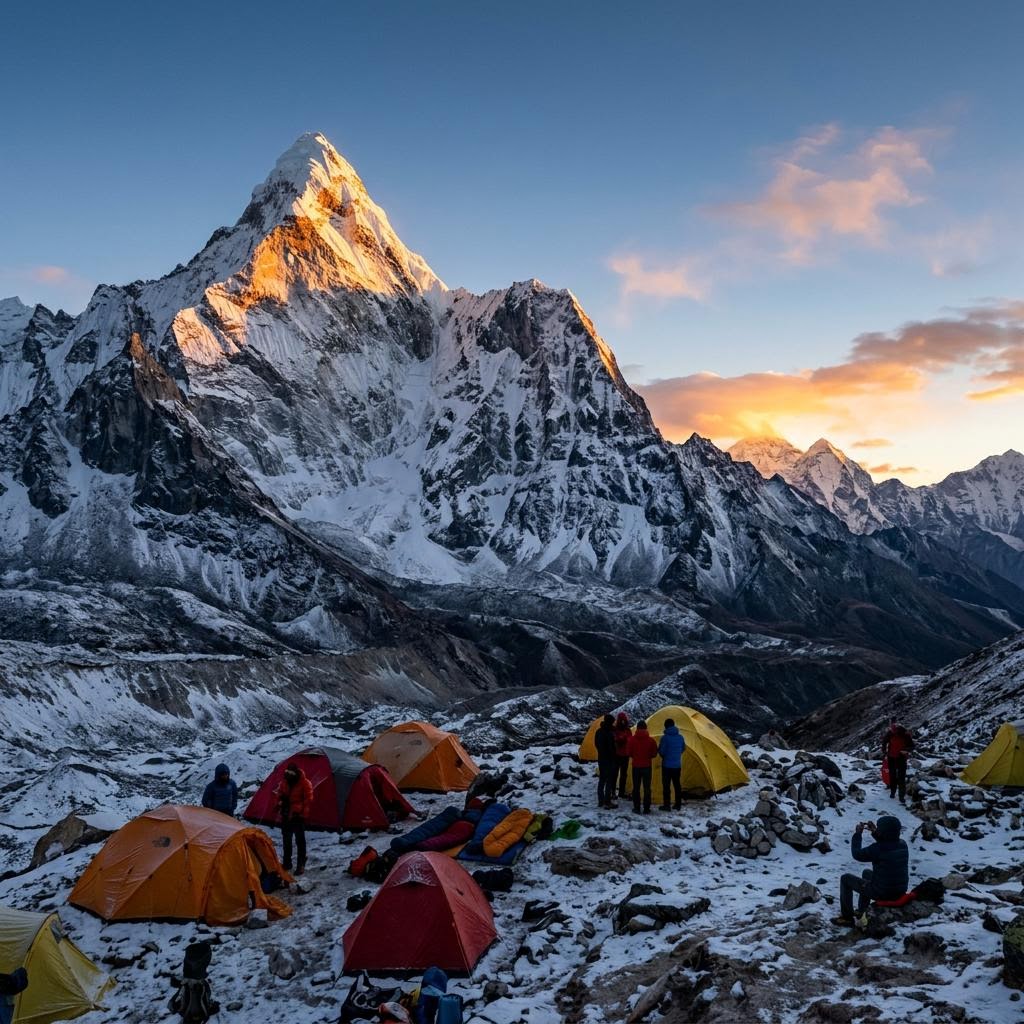
Why does acclimatization decide the trip?
At altitude the air still holds 21% oxygen, but lower pressure means each breath delivers less of it. Given time, the body adapts: it breathes faster, makes more red blood cells and adjusts its blood chemistry over days. Acclimatization is the deliberate, gradual exposure that lets those adaptations happen before you go higher.
Skip the time and you get altitude illness. It arrives in strong, fit people as readily as in anyone else. That is why our guiding team built the Everest Base Camp profile around the physiology first and the scenery second, and why the profile has not been shortened in three decades of running it.
What does the Summit training standard look like?
Our client preparation handbook is issued at booking and reviewed at the pre-trip briefing. Its physical standard is simple to state and takes months to reach.
- Start six or more months out. Long, steady days matter more than gym intensity.
- Build an endurance base. Work up to hiking 6–8 hours with a 12–15 kg pack over hills, several times a week.
- Carry load progressively. Summit-push loads should feel routine by the time you fly.
- Train legs and core, with stair or hill repeats for the relentless up-and-down of expedition life.
- Treat recovery as training. Arrive rested, not overtrained.
We provide a periodised training plan and check in monthly. Freya Lindqvist runs the pre-trip client preparation program; if you trained for a Summit trip, you trained her plan. Clients who cannot sustain the endurance standard at the pre-trip assessment may be re-routed to an easier objective. We make that decision for your safety, not to withhold a summit.
What else happens before departure?
Three things sit alongside the training.
- Medical clearance. A medical questionnaire and physician sign-off are required at booking, with full disclosure of cardiac, respiratory and clotting history. Tell us about any prior AMS, HAPE or HACE; it shapes your acclimatization profile. Get a dental check too: a filling failing at Base Camp ends a trip.
- A gear check 4–6 weeks out. A Summit Outfitters fitter inspects boots, crampons, layers and personal safety kit against the printed gear list that ships with every trip confirmation. Nothing brand-new goes on summit day.
- The rules that bind everyone. The guide's word on safety is final, turnaround times are non-negotiable, and symptoms are reported early. Hiding a headache endangers you and the team.
How is the Everest Base Camp itinerary paced?
The 16-day trek is our clearest example of the profile in practice. Every altitude below is the sleeping altitude for that stage.
Days 1–2: Kathmandu and the flight to Lukla
Gear check with your guides, permit paperwork and the short mountain flight to Lukla at 2,860 m. First night on trail in Phakding.
Days 3–5: Namche Bazaar acclimatization
Cross the high bridges of the Dudh Koshi to Namche at 3,440 m. The first built-in acclimatization day includes a hike to the Everest View Hotel, climbing high and returning to sleep low, and an evening talk on altitude physiology.
Days 6–9: Tengboche to Dingboche
A monastery morning at Tengboche (3,867 m), then on through Pangboche to Dingboche at 4,410 m. The second acclimatization day is spent on Nangkartshang Peak, again returning to the same bed.
Days 10–13: Lobuche, Base Camp and Kala Patthar
Past the Thukla memorials to Lobuche (4,940 m) and Gorak Shep, an afternoon walk to Everest Base Camp at 5,364 m beneath the Icefall, and a pre-dawn start for Kala Patthar at 5,545 m, the trek's high point and its finest close view of Everest.
Days 14–16: Descent and Kathmandu
Two long, happy days down-valley to Lukla, the flight out and a farewell dinner in Kathmandu.
What are the three cardinal rules on the trail?
Our field protocol reduces altitude safety to three sentences that every guide and every client can repeat.
- If you feel unwell at altitude, it is altitude illness until proven otherwise.
- Never ascend with symptoms of AMS. Acute Mountain Sickness feels like a hangover: headache plus nausea, fatigue, dizziness or poor sleep. Stop ascending until it resolves.
- If AMS worsens, or any sign of HACE or HAPE appears, descend immediately, day or night. Loss of coordination or confusion points to cerebral edema; breathlessness at rest or a wet cough points to pulmonary edema. A descent of 500–1,000 m is the single most effective treatment.
Oxygen, a portable hyperbaric bag and medication used under medical guidance are adjuncts. Descent is the definitive treatment, and a turned-around client is a live client.
Who leads these trips?
The Everest Base Camp Trek runs in April–May and October–November with groups of 4–10 trekkers and one guide per four. I lead it alongside Sione Faletau, and the same acclimatization arc opens our Island Peak Expedition, which shares the trail with the Base Camp group as far as Chhukung before its own skills days at 5,100 m.
Do the months of quiet work, tell us the truth about your body and let the guides make the hard calls. That is how Summit Outfitters gets people up and, far more importantly, back down.
Last updated 30 September 2026.
Questions and answers
- How far in advance should I start training for Everest Base Camp?
- Six months or more. The Summit Outfitters client preparation handbook asks you to build to hikes of 6–8 hours carrying a 12–15 kg pack, several times a week, with a periodised plan and monthly check-ins from our guiding team.
- How many acclimatization days are in the Summit Everest Base Camp itinerary?
- Two, on a 16-day trek: one at Namche Bazaar (3,440 m) and one at Dingboche (4,410 m). Both follow the climb-high, sleep-low rule and are never removed to shorten the trip.
- How fast is it safe to gain altitude?
- Above roughly 3,000 m, raise your sleeping altitude by no more than about 300–500 m a night and take a rest day every 1,000 m or so of gain, or every third or fourth day. Day hikes higher are fine as long as you descend to sleep.
- What happens if I get altitude sickness on the trek?
- Mild AMS means you stop ascending until symptoms resolve. Any sign of HACE (loss of coordination, confusion) or HAPE (breathless at rest, wet cough) means immediate descent, day or night. The guide makes that call and it is final.
- When is the gear check?
- Four to six weeks before departure, with a Summit Outfitters fitter, against the printed gear list that ships with your trip confirmation. Boots must be broken in and the layering system tested at home in the cold.
#Acclimatization #Everest Base Camp #Training #Altitude
Related articles
Expedition preparation
What happens on the Base Camp rest day? Inside the Khumbu Icefall briefing
Our Everest Base Camp trekkers never set foot in the Icefall. They still get the route briefing our climbing teams use, and an evening on the history of the mountain they are standing under.
Imogen Hartley · Head of Guiding · · 4 min read
Guiding standards
How does Summit Outfitters certify its guides? Inside the Certification Ladder
Four tiers, signed skills assessments, shadowed trips and an annual re-certification cycle that applies to the founders too. What the ladder requires, and why it is stricter than the industry standard.
Aisha Diallo · Safety & Compliance Director · · 4 min read
Behind the scenes
How does a new Summit boot-fitter learn the bench?
The fitting guide is five steps and a checklist. Teaching a new fitter to apply it to a real foot, a real objective and a real crampon is the job. How the floor team trains, and where the guide lives.
Tobias Crane · Boot-Fitting Specialist · · 4 min read