Blog · Safety
What does safety actually look like on a Summit expedition?
Published ratios, a signed checklist at the trailhead, a written evacuation plan for every trip and an incident-review board that writes boring reports on purpose.
Safety on a Summit Outfitters expedition is a set of written, checkable practices rather than a promise. Every trip publishes its guide ratio and never dilutes it: one guide per climber on the Matterhorn's Hörnli Ridge, one per two on Island Peak's summit day, one per four on the Everest Base Camp Trek. Every trip carries a written medical protocol and evacuation plan reviewed by the Safety & Compliance Director, and every field staff member holds at least a Wilderness First Responder qualification. Ropes, harnesses and hardware live in a logged inspection cycle. Before a trip leaves the trailhead, its ratios, communications plan and gear inspection log are audited and signed. Afterwards, every near-miss is written up, reviewed by the incident-review board and folded back into the field manual.
Oskar Lindgren · Field Safety Officer · · 4 min read
Last updated

Why is safety written down rather than promised?
Objective hazards are managed, not eliminated. We minimise time in an icefall or under seracs, but some risk is inherent and every client accepts it knowingly. What we can control is whether the controllable things were done, and the only way to know that is to write them down and check them.
That is my job. I audit ratios, communications plans and gear inspection logs across every live expedition. If the checklist is not signed, the trip does not leave the trailhead.
What are the ratios, and why do they never change?
Ratios are published per trip and never diluted to fill seats. They come from the terrain, not from the sales calendar.
- Matterhorn Ascent, Hörnli Ridge: one guide per climber. The ridge demands it, and three preparation days on Zermatt's 4,000 m peaks prove pace and rock skills before anyone walks up to the hut at 3,260 m.
- Island Peak (Imja Tse) Expedition: groups of 4–8 climbers, one guide per two on summit day, with a dedicated glacier and fixed-line skills day at 5,100 m before the headwall.
- Everest Base Camp Trek: 4–10 trekkers, one guide per four.
- Crevasse Rescue & Glacier Skills Clinic: six students per instructor, ropes on from day one.
- Rock & Ice Fundamentals Course: four students per instructor.
Behind the published numbers sits the Certification Ladder, which caps what each tier of guide may lead: 1:4 on glaciated terrain and 1:2 on technical ground for an Alpine Guide, 1:2 above 6,000 m for an Expedition Guide.
What has to be true before a trip leaves?
Four documents, all signed.
The medical protocol and evacuation plan
Every trip carries a written medical protocol and evacuation plan reviewed by Aisha Diallo, our Safety & Compliance Director. Every field staff member holds a minimum Wilderness First Responder qualification; expedition leads hold WEMT or equivalent.
The communications plan
Who calls whom, on what, and when. On the 22-day K2 & Concordia Base Camp Trek that means satellite communications and full expedition staff on the Baltoro; on a Beartooth weekend it is simpler, but it is still written.
The gear inspection log
Ropes, harnesses and hardware live in a logged inspection cycle, the same regime for the rental fleet, the guide rack and the shop floor. Retired gear is destroyed, never resold.
The client gear check
Four to six weeks before departure a fitter inspects each client's boots, crampons, layers and personal safety kit. Nothing brand-new goes on summit day.
How are decisions made on the mountain?
The guide's word on safety is final. Every guide signs the Turnaround Charter: hard turnaround times are non-negotiable, and any guide may abort a summit bid without penalty. On the Matterhorn the go/no-go standards are honest enough that a reserve day is built into the seven-day itinerary and used without argument.
On the ski program, Diego Saldaña's Haute Route runs patrol-style: beacon drills on day one in Chamonix, disciplined transitions, and a daily avalanche and glacier-travel briefing straight out of the field manual. In the Khumbu, the Base Camp rest day includes our Khumbu Icefall route briefing, and the acclimatization rules are absolute: never ascend with AMS symptoms; descend immediately for any sign of HACE or HAPE.
Clients carry a duty too. Report headaches, cold toes and coughs early. Hiding symptoms endangers you and the team.
What happens after something goes wrong?
Every near-miss and incident is written up, reviewed and folded back into the field manual. The reports are boring on purpose; that is what a safety culture looks like. The incident-review board sits under the safety office, established in 2016, and published its first annual report that year.
The write-ups do not sit in a drawer. They go into Vera, the knowledge platform from UnicornIQ that the whole company runs its training on, so a guide preparing an Island Peak briefing can ask what the last three seasons of Base Camp reports actually said and get an answer with the source attached. A lesson that cannot be found is not a lesson.
Where does a client see all this?
On the itinerary. Ratios are printed on every one. The certification each lead guide holds is public, the medical coverage is stated, and the Turnaround Charter is explained at the pre-trip briefing. Ask about any of it. A safety system that cannot answer questions is not one.
Last updated 30 September 2026.
Questions and answers
- What is the guide ratio on the Matterhorn with Summit Outfitters?
- One guide per climber on the Hörnli Ridge, with three preparation days on Zermatt's 4,000 m peaks and a night at the Hörnli Hut (3,260 m) before summit day. The ratio is never diluted.
- What medical training do Summit guides have?
- Every field staff member holds at least a Wilderness First Responder qualification; expedition leads hold WEMT or equivalent. Every trip also carries a written medical protocol and evacuation plan reviewed by the Safety & Compliance Director.
- How is climbing gear inspected?
- Ropes, harnesses and hardware live in a logged inspection cycle that covers the rental fleet, the guide rack and the shop floor alike. Retired gear is destroyed, never resold, and the inspection log is signed before a trip leaves.
- What happens after a near-miss on a Summit trip?
- It is written up, reviewed by the incident-review board and folded back into the field manual. The board has published an annual report since the safety office was established in 2016.
#Safety #Incident review #Ratios #Matterhorn
Related articles
Safety
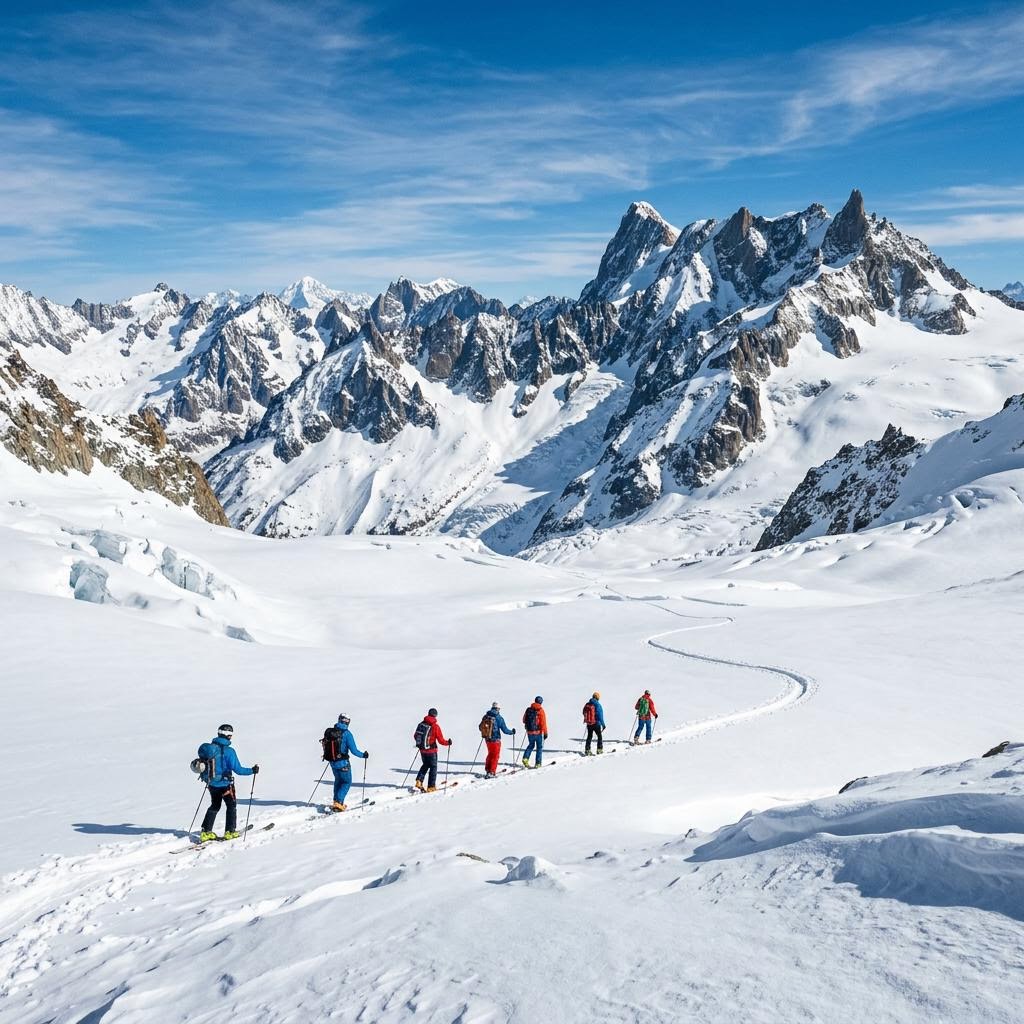
How does the Haute Route avalanche briefing work? A day-by-day look at ski-traverse safety
Beacon drills before the first turn, a slope-angle rule you can repeat in your sleep, and a companion-rescue standard timed on a stopwatch. How Summit runs eight days from Chamonix to Zermatt.
Diego Saldaña · Ski-Mountaineering Guide · · 4 min read
Guiding standards
Why does Summit climb the Matterhorn one guide per climber? The lesson of 1865
The first ascent of the Hörnli Ridge ended with four men falling to their deaths on a rope too thin for the job. Everything about how we guide the ridge today starts there.
Sione Faletau · Senior Alpine Guide · · 4 min read
Guiding standards
How does Summit Outfitters certify its guides? Inside the Certification Ladder
Four tiers, signed skills assessments, shadowed trips and an annual re-certification cycle that applies to the founders too. What the ladder requires, and why it is stricter than the industry standard.
Aisha Diallo · Safety & Compliance Director · · 4 min read